
Understanding what a blast chiller is is essential for any professional kitchen managing high volumes, strict food safety standards and consistent production cycles. A commercial blast chiller unit rapidly reduces the temperature of cooked food, limiting bacterial growth while preserving texture, taste and nutritional value.
In modern foodservice operations, blast chilling is increasingly becoming an essential activity. It is a controlled process that protects food safety, supports HACCP compliance and improves workflow efficiency across preparation, service and pastry production.
What is a blast chiller?
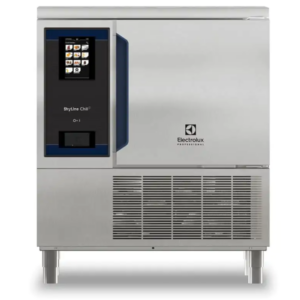
A blast chiller is a specialised piece of commercial refrigeration equipment built to cool food rapidly under controlled conditions.
Unlike domestic refrigeration, which lowers temperature gradually, a blast chiller uses powerful airflow and precise temperature management to extract heat from food at speed. The objective is not simply to cool, but to move safely and efficiently through the bacterial growth range.
In practical terms, hot food at approximately +70 °C is reduced to +3 °C within 90 minutes, in accordance with UK food safety guidance. This rapid transition protects both product quality and regulatory compliance.
Understanding what a blast chiller is used for also means recognising its role in structured production systems such as cook-and-chill, centralised kitchens and high-volume catering.
How rapid cooling cycles work
A blast chiller works by removing heat quickly and evenly through high-velocity chilled airflow and precise temperature control. Instead of letting trays cool gradually at room temperature, the unit pulls heat out fast enough to move food safely through the bacterial growth range.
A rapid cooling cycle typically includes:
- Intensive air circulation to keep the temperature uniform across trays
- Core temperature monitoring (often with a probe) to verify the target is reached
- Automatic cycle control to maintain consistent cooling speed
In practice, this means hot food can be brought down from around +70 °C to +3 °C within 90 minutes, supporting safe storage and reliable production planning.
If freezing is required, blast freezing applies the same approach at much lower temperatures (often down to -41 °C). Faster freezing helps reduce the size of ice crystals, which supports better texture when food is thawed and regenerated.
Food safety, HACCP and temperature control
Food safety is the primary reason operators invest in a blast chiller. Rapid cooling significantly reduces the window for bacterial proliferation and supports structured food safety management.
Electrolux Professional equipment aligns with HACCP (Hazard Analysis and Critical Control Points) principles. Integrated monitoring functions allow temperature tracking and documentation of cooling cycles, supporting audit requirements and internal quality control procedures.
Effective blast chilling contributes to:
- Controlled compliance with temperature regulations
- Extended shelf life under safe storage conditions
- Reduced risk of cross-contamination
- Reliable regeneration performance during service
For kitchens implementing advanced production models, blast chilling becomes a core component of the HACCP strategy rather than an isolated appliance.
Applications across prep, service and pastry
A commercial blast chiller supports a wide range of operational models.
Preparation kitchens
Large batches can be cooked during off-peak hours, chilled safely and stored for later service. This reduces pressure during peak periods.
Banqueting and event catering
Plated meals can be prepared in advance, chilled rapidly and regenerated with consistent results.
Pastry and bakery production
Creams, mousses and delicate preparations can be stabilised quickly, improving efficiency and structural reliability.
Central production units
Multi-site operators can standardise output before distribution, maintaining consistency across locations.
Understanding what a blast chiller is used for highlights its strategic role in production planning, waste reduction and quality control.
Sizing, capacity and tray/rack formats
Selecting the right model requires careful evaluation of kitchen volume and workflow.
Key factors include:
- Number of covers per service
- Batch production size
- Compatibility with GN tray formats
- Integration with combi ovens or roll-in rack systems
An undersized unit can create bottlenecks, while oversizing may impact energy efficiency. Matching capacity to operational demand ensures optimal performance from a commercial blast chiller.
Electrolux Professional offers configurations ranging from compact units for smaller kitchens to roll-in trolley models for large institutional operations.
Installation and placement
Correct placement improves both safety and efficiency. Positioning the blast chiller close to cooking equipment reduces handling time and minimises exposure to ambient temperatures.
Installation planning should consider:
- Ventilation clearance
- Ambient kitchen temperature
- Workflow zoning
- Access for cleaning and servicing
Professional installation and preventive maintenance planning help preserve long-term reliability.
Explore the Electrolux Professional blast chiller SkyLine and Crosswise ranges and request expert guidance to identify the right configuration for your operation.
FAQs
What is a blast chiller used for in professional kitchens?
It is used to cool cooked food rapidly to safe storage temperatures, supporting food safety and structured production systems.
How does a blast chiller work in practice?
It circulates chilled air at high-speed while monitoring core temperature, ensuring rapid and even heat extraction.
Is a blast chiller the same as a refrigerator?
No. A refrigerator maintains cold storage conditions, whereas a blast chiller is designed for rapid temperature reduction immediately after cooking.
Why is a commercial blast chiller important for HACCP compliance?
It enables controlled cooling within regulated timeframes and provides temperature monitoring that supports audit documentation.
Does Electrolux Professional offer blast chilling solutions for high-volume kitchens?
Yes. The Electrolux Professional range includes scalable systems designed for reliability, food safety and operational efficiency.