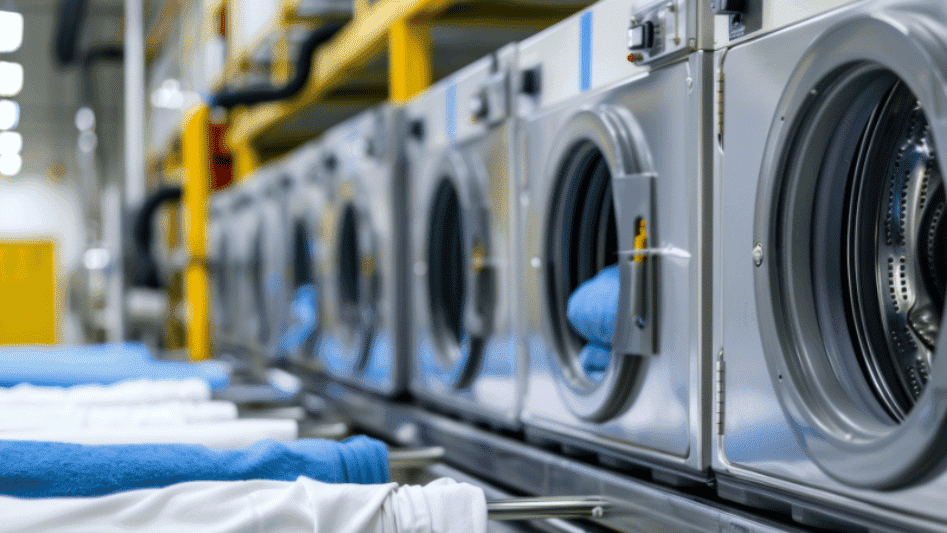
Commercial laundry equipment should be selected around the operation it must support, not only the maximum load shown on a specification sheet. A suitable system balances throughput, textile requirements, available utilities, operator workflow and long-term serviceability.
Start With the Daily Laundry Profile
Record the kilograms processed on normal and peak days, the number of operating hours and the types of textiles involved. Towels, bedding, uniforms and heavily soiled workwear place different demands on wash programmes and handling.
Peak demand matters because a machine that is adequate on quiet days may create queues when occupancy, production or patient volumes rise. Allow for realistic growth without buying capacity that will remain unused.
Plan a Complete Laundry Process
Commercial laundry machines work as a system. Washing capacity, extraction performance, drying capacity, finishing and storage should support one another. A bottleneck after washing can leave clean textiles waiting and reduce the benefit of a faster washer.
- Map soiled-item arrival and sorting
- Separate clean and soiled movement where required
- Match dryer capacity to washer output
- Provide space for folding and temporary storage
- Confirm drainage, ventilation, power and water requirements
Compare Operating Requirements
Water, energy, detergent and labour affect the cost of every load. Programmable controls, automatic dosing and load-related features may improve consistency when they match the site’s processes. Ask suppliers to explain assumptions rather than comparing headline claims without context.
Review Equipment and Service Together
Explore the official commercial washer range to compare available professional models and capacities.
For support across the equipment lifecycle, review Essentia Customer Care. Installation planning and qualified service should be considered before the purchase is finalised.
Make a Documented Shortlist
Shortlist machines against the same criteria: capacity, cycle requirements, available utilities, operator interface, site layout, maintenance access and local support. A documented comparison helps stakeholders choose for operational fit rather than a single purchase-price figure.
Frequently Asked Questions
1. What makes a laundry machine commercial?
Commercial machines are designed for professional workloads, repeatable programmes and operational environments where capacity, durability and serviceability matter.
2. How should machine capacity be selected?
Use normal and peak textile volumes, operating hours, cycle times and planned growth rather than guessing from business size alone.
3. Should washers and dryers have the same stated capacity?
Not automatically. Textile moisture retention, drying time and workflow determine the required balance.
4. Why should after-sales support be considered?
Professional equipment is a long-term operational asset. Installation, preventive maintenance, genuine parts and qualified service can affect uptime and lifecycle planning.
5. Where can businesses discuss equipment and service requirements?
Use the Electrolux Professional Malaysia sales and service locator to find an appropriate local contact.